When Religious Advocacy Enters Public Policy
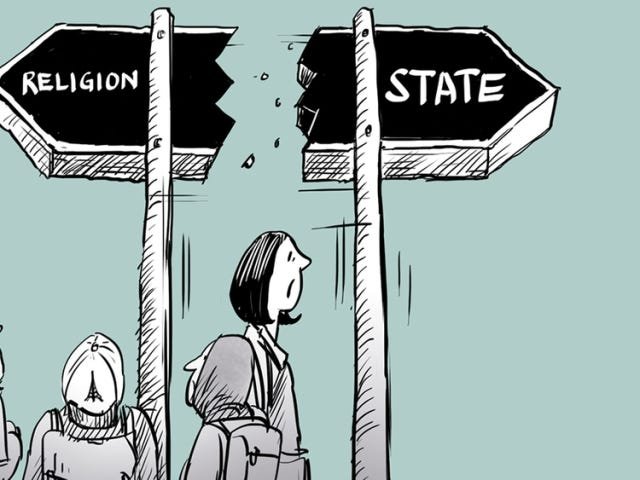
When religious platforms engage in public policy advocacy, the boundary between civic expression and political signaling becomes fragile, often affecting minority–majority relations and the stability of a secular state. Communalism is not defined by doctrine or denomination; it is defined by practice—specifically, the mobilization or legitimization of political power through religious identity.
In a deeply polarised society, publicly projecting elected representatives under a denominational or religious banner—irrespective of party affiliation—is never a neutral act. It is political signaling rooted in identity rather than constitutional mandate. When such gestures are undertaken by influential religious institutions, they demand serious public scrutiny, not quiet acceptance.
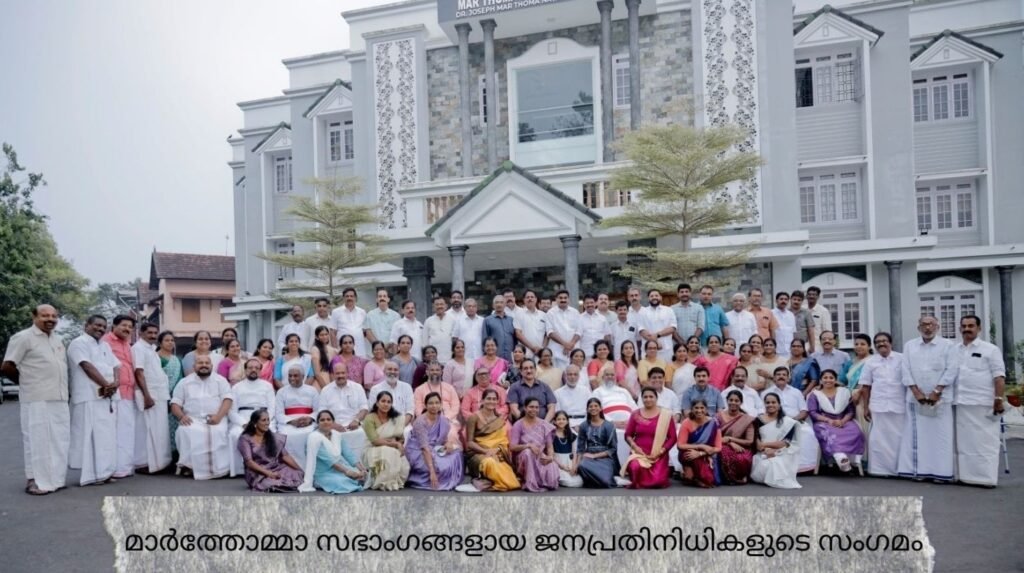
The recent public projection of elected representatives associated with the Mar Thoma Church raises precisely this concern. The issue is not about individual faith, political diversity, or freedom of worship. It is about the institutional use of religious identity to frame political authority—an approach that sits uneasily within a constitutional democracy committed to secular governance.
Maramon Convention: From Gospel Platform to Political Visibility
The Maramon Convention, established over a century ago, is among the largest Christian gospel gatherings in Asia. Historically, it has served as a space for spiritual reflection, moral discourse, and religious teaching. However, over the years, a practice has evolved where political leaders and senior bureaucratic officials attending the Convention are publicly introduced and welcomed from the main stage.
On the surface, this may appear as protocol or courtesy. In reality, it is far more consequential.
The Maramon Convention is not a closed or private religious gathering. It attracts crowds exceeding 100,000 at a time, is widely covered by media, and is live-telecast to a much larger audience. In such a setting, public acknowledgment from the main platform functions as visibility, validation, and recognition. In political terms, this approximates endorsement—even if no explicit support is articulated.
In contemporary politics, symbolism often matters more than formal declarations. A public introduction before a mass audience communicates legitimacy, proximity, and institutional acceptance. To assume otherwise is to underestimate how political communication actually works.
A Side Event That Is Not Politically Neutral
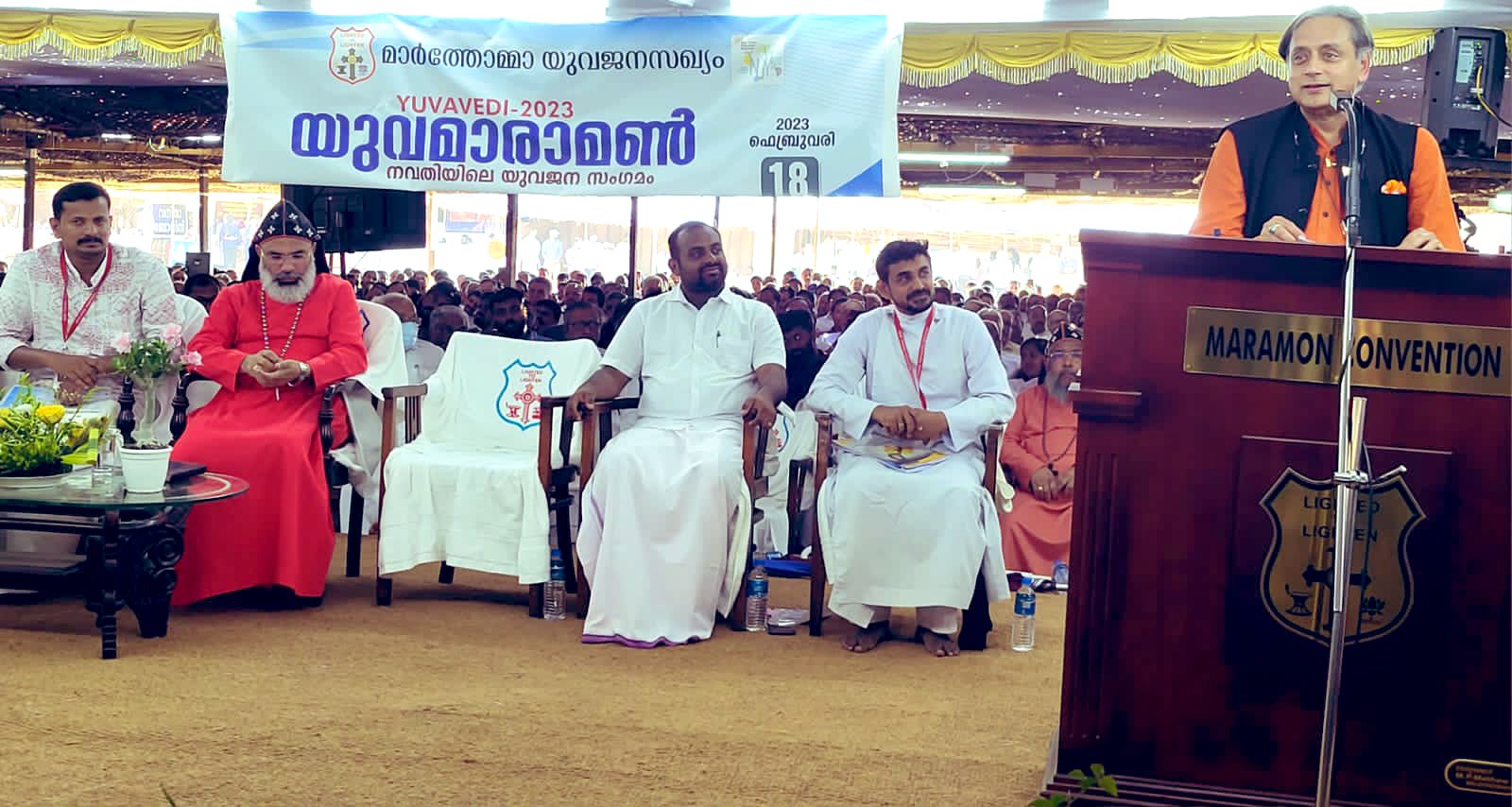
The participation of Shashi Tharoor, a sitting Member of Parliament, senior Congress leader, and a widely discussed Chief Ministerial contender, in addressing a side event at the Maramon Convention further complicates this boundary. Regardless of the subject matter of the address, such participation cannot be treated as politically neutral.
A “side event” within the Convention ecosystem still benefits from the Convention’s audience, legitimacy, and institutional aura. It offers access to a large, identifiable constituency in a highly visible setting. In an electoral democracy where recall, symbolism, and identity-based communication play decisive roles, this becomes a form of political exposure that religious platforms must handle with extreme caution.
The issue here is not the individual leader, party affiliation, or ideological position. It is the precedent such participation sets. If religious platforms become spaces where senior political figures—especially probable executive contenders—gain visibility, the line between spiritual gathering and political arena becomes dangerously thin.
The problem does not lie in participation itself, but in participating within an institutional framework that confers symbolic legitimacy, where even routine engagement can function as an implicit political signal.
The Secular Boundary and the Risk of Communal Signaling
India’s secularism is not anti-religious; it is anti-appropriation of religion for political power. The constitutional framework requires a principled distance between religious institutions and political authority. This distance is essential precisely because of India’s diversity and history of identity-based mobilization.
When religious platforms foreground elected representatives, they risk collapsing this distance. The danger is not limited to any one denomination. If similar actions by other faith-based institutions are criticised as communal or sectarian, the same standard must apply here. Selective silence undermines democratic credibility.
Communalism is not defined by doctrine or denomination; it is defined by practice—specifically, the act of mobilizing or legitimizing political power through religious identity. Even unintended signals can have lasting political effects in a fragmented society.
Policy, Power, and Institutional Overreach
An even more serious concern arises when religious platforms move beyond spiritual discourse to shape public policy narratives—seeking to influence governance agendas, social policy priorities, or administrative decisions through moral authority exercised in mass gatherings.
Just for instance, following case is important to note: according to reports on the inauguration of the 2024 Maramon Convention, the Metropolitan of the Malankara Mar Thoma Syrian Church, in his inaugural address, demanded immediate action to implement the recommendations of the J. B. Koshy Commission. This intervention is significant—not because it is partisan, but because it moves from moral commentary into explicit public policy advocacy, delivered from a mass religious platform.
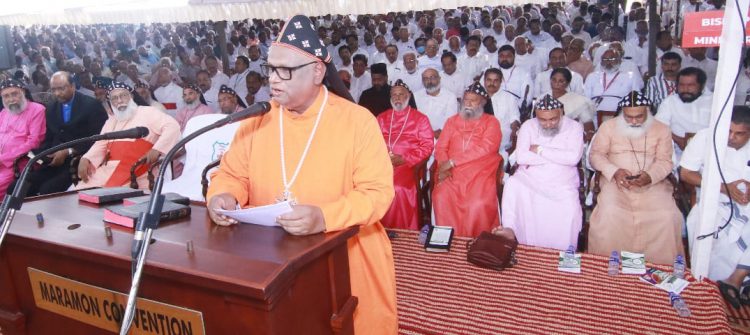
Religious leaders speaking on ethical concerns, social justice, or moral decay is well within the legitimate domain of faith-based discourse. However, calling for immediate implementation of a specific government commission’s recommendations constitutes agenda-setting in the public policy space.
This is no longer abstract moral reflection; it is a concrete demand directed at the state, articulated in a highly visible religious forum.
Policy formulation in a democracy must remain anchored in constitutional institutions, public deliberation, and democratic accountability—not ecclesiastical authority.
Church leaders, like leaders of all faiths, must recognise the asymmetry of power inherent in such platforms. When political actors are present and publicly acknowledged, the platform ceases to be purely religious and enters the political domain.
The Responsibility of Restraint
This is not an argument against religious freedom or faith-based gatherings. It is a call for institutional restraint and democratic discipline. In polarised contexts, gestures carry amplified meaning. What may be routine internally can become deeply political externally.
Religious institutions that command moral authority and mass participation must exercise exceptional care in preserving the boundary between spiritual life and political power. Democratic representation must remain clearly separated from religious institutional symbolism—not as a legal technicality, but as a civic necessity.
Failing to uphold this separation sends dangerous signals. In today’s India, that is a risk the country can ill afford.