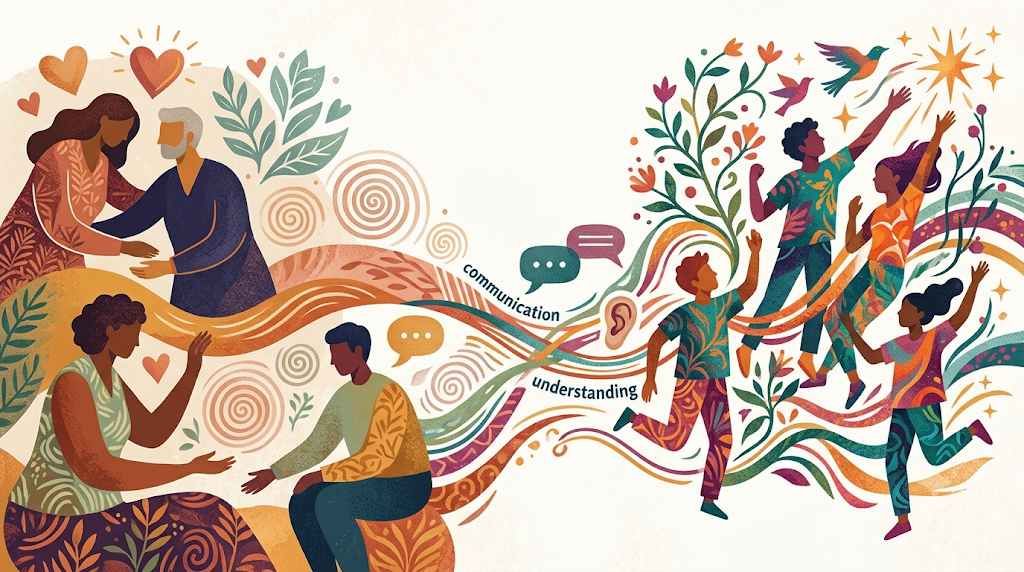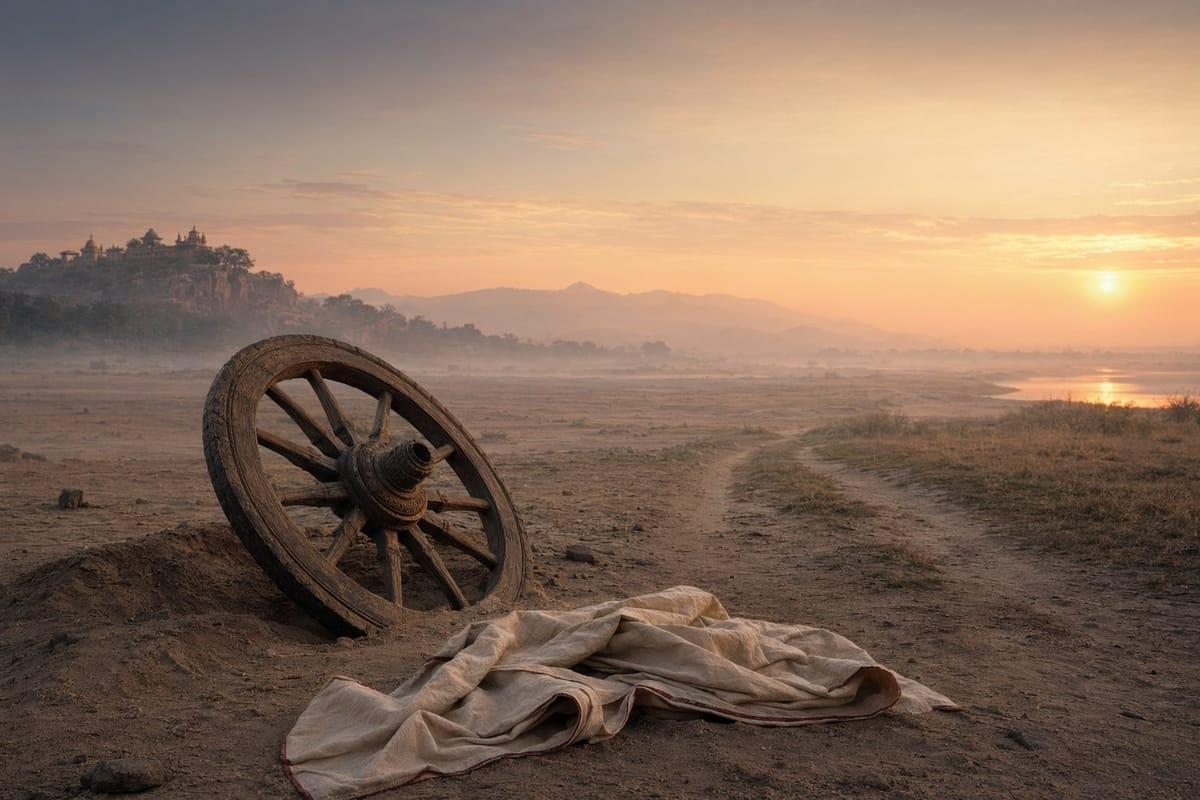
Religious texts shape how societies understand war, victory, and coexistence. Comparing the conquest of Canaan with the Mahabharata’s Kurukshetra War shows two very different approaches to violence. In the Canaan narrative, victory is a sign of divine favor, and the suffering of the defeated is ignored. In the Mahabharata, war is fought for justice, yet the story focuses deeply on grief, remorse, and the human cost of winning. These ancient narratives still influence the public mind, national policies, and approaches to conflict today. When societies view victory as a divine right, peace remains elusive; when they remember the human toll of war, restraint and dialogue become essential.
When a conquest is justified in the name of God, or of dharma, where does the narrative place the human cost? Does it acknowledge those who died and the suffering of those who survived, or does it leave them outside the account of victory? More broadly, on what grounds do religious texts justify the loss of human lives, and how do they reconcile such losses with the moral principles they seek to uphold? This article examines the ethical and moral foundations of the Canaan conquest and the Kurukshetra War narratives, and how they have influenced the societies shaped by these religious traditions.
Ethnic cleansing with God’s sanction
Journey to Canaan is presented as part of fulfilment of a covenant, which is not merely a movement for living peacefully along with the inhabitants, in the spirit of pluralism.[1] These passages, Deuteronomy chapters 7 and 20 and Joshua chapters 6 and 10–11, are filled with military strategies, narrations of executions and broadly speaking “ethnic cleansing” of communities who occupied the territory. Further, all violence committed upon the ‘Canaan inhabitants’ being justified for the sake of preserving the identity of the ‘chosen ones’ as God’s plan.
The glorification and justification of violence recur in the Canaan narrative, where victory is presented as evidence of divine favour, while violence associated with these victories justified through religious obligation.[2] The question that arises is whether this leave room for dialogue and peaceful coexistence of different communities.
Whereas in the Mahabharata, the cost of victory is placed within the victory narrative itself. In the Deuteronomistic history, by contrast, the human losses among the Canaanites are neither acknowledged nor lamented. This is not because the Bible does not know how to lament. In this story, however, the Canaanites do not appear to be regarded as people whose lives and deaths deserve the same recognition or mourning.
The Meaning of Victory in Canaan and Kurukshetra
The contrast becomes particularly interesting when we examine the Kurukshetra War in the Mahabharata. The victory of the Pandavas brings neither lasting happiness nor a sense of complete fulfilment. Though Bhagavad Gita provides a philosophical explanation about Karma, performing one’s duty, even if it involves fighting a war, the narrative occupies space for those who suffered including opponents and their families, particularly women and children and even the unborn. The Stri Parva recounts the grief of Gandhari and the Kaurava women over the deaths of their sons, husbands and relatives. It gives voice to the suffering of the defeated, not just the victors.[3] After the war, Ashwatthama attempts to kill Uttara’s unborn child to end the Pandava lineage. Krishna intervenes to save the child, who is later born as Parikshit.[4]
Here the narrative is balanced, where there is justification of war alongside an examination of its consequences. Mahabharata does not reject the idea of fighting for dharma & justice. However, it has not permitted to overshadow the suffering the Kurukshetra incident caused.
This is a significant difference in the way the two narratives present violence. While the conquest of Canaan is presented through the language of divine fulfilment and victory, Kurukshetra is remembered through grief, moral questions about war and the consequences of destruction.
The Canaan narrative raises questions about how religious belief can be used to justify the destruction of other communities, while the Mahabharata examines how even a war fought in the name of dharma and justice can leave behind immense human suffering.
How Civilizations Understand War and Its Consequences
Religious texts and their interpretations can influence societies far beyond individual beliefs and religious practices. They shape how people justify and legitimatise use of force for military interventions and war. When such historical parallels(like Canaan or Kurukshetra or other) become part of public psyche, they can influence public opinion, political leadership and foreign policies. Even entire focus of a State or a group of States and their public expenditure for war finds justification.
The two World Wars were fought largely among European powers whose societies were predominantly Christian, resulting in enormous destruction and loss of human life.[5] As Philip Jenkins notes in The Great and Holy War, ‘even in an age of modern politics, European nations framed conflict in deeply religious terms—turning political rivalries into battles between good and evil, where the only acceptable outcome was total victory and the complete defeat of the other side.[6]
Attitudes towards war and victory are not shaped by politics and military history alone. They are also shaped by the stories and traditions through which societies remember conflict. When a culture views victory as proof of being right, it becomes much harder to show restraint after winning.
The Mahabharata, for instance, does not portray the victory at Kurukshetra as a cause for celebration. It recounts the grief and consequences of war fought in the name of dharma. Such narratives preserve an awareness of the human cost of war and raise questions about the true meaning of victory. Over generations, these ideas, alongside historical experiences and political considerations, influence how societies understand the exercise of power and the responsibilities that follow military success.
Modern Asian history offers instances worth examining in this context. After the 1971 war, India returned Pakistani territory that had come under its control.[7] Following the 1962 Sino-Indian War, China declared a unilateral ceasefire and withdrew from much of the territory it had captured in the eastern sector, while retaining control of Aksai Chin in the west.[8] These decisions had their own strategic and political calculations, but they also invite a broader reflection on the relationship between civilizational memory, the futility of prolonged conflict and the choices nations make after victory.
What Do Sacred Narratives Leave Behind?
Perhaps the most important question is what societies learn from narratives like the conquest of Canaan and the battle of Kurukshetra in the Mahabharata.
The Pandavas win the war, but the kingdom they inherit is surrounded by death, grief and suffering. The conquest narratives of Canaan, by contrast, present territorial victory as the fulfilment of a divine promise. The resulting link between territory, religious identity and divine entitlement raises questions that remain relevant to contemporary conflicts in the region.
Ultimately, the lesson of Kurukshetra is that victory is never the end of the story—it is only the beginning of a moral reckoning. Societies that treat conquest as proof of divine favour often struggle to find peace, while those that remember the human cost of war are more likely to see restraint, dialogue and coexistence not as signs of weakness, but as necessities for survival.
(Perumal Koshy)
22 November 2026
[1] The covenant with Abraham carries a universal promise: that through him, all families of the earth would be blessed (Genesis 12:1–3). This broader understanding is reinforced by the biblical affirmation that the earth belongs to God (Psalm 24:1) and is not the exclusive possession of any one people (Leviticus 25:23).
[2] The ethical problem posed by the destruction of Jericho in the Book of Joshua has been examined by Nenad Božović. He questions how the destruction of an entire population, including women and children, can be reconciled with the Christian understanding of a merciful God. He also draws attention to the later political use of the narrative to legitimise territorial expansion and violence. Nenad Božović, “The Conquest of Jericho — Interpretation of Josh 6:21,” Bogoslovlje 76, no. 1 (2017): 27–48.
[3] See The Mahabharata, Book 6, Bhishma Parva (Bhagavad Gita, chapters 2 and 18); Book 11, Stri Parva; and Book 12, Shanti Parva. Also see Bhushan Aryal, “The Rhetoric of Krishna versus the Counter-Rhetoric of Vyas,” Humanities 8, no. 4 (2019): 154, https://doi.org/10.3390/h8040154.
[4] The Mahabharata, Book 10, Sauptika Parva, Chapter 16.
[5] George L. Mosse, “Christianity and Nationalism in Nineteenth-Century Europe,” Studies in Church History 51 (2015); Brian Stanley, “Wars and Rumors of Wars: The Response of British and American Churches to the First World War,” in Christianity in the Twentieth Century: A World History (Princeton University Press, 2018); Jan Bank and Lieve Gevers, Churches and Religion in the Second World War (London: Bloomsbury Academic, 2016).
[6] Philip Jenkins, The Great and Holy War: How World War I Became a Religious Crusade (HarperOne, 2014)
[7] Government of India. Agreement between the Government of India and the Government of Pakistan on Bilateral Relations (Simla Agreement), July 2, 1972. Ministry of External Affairs, Government of India. This establishes the agreement’s commitment to peaceful settlement, withdrawal of forces and respect for the Line of Control.
[8] Nehru, Jawaharlal. “Prime Minister’s Statement Regarding Chinese Ceasefire Proposals and Related Matters.” Rajya Sabha, December 12, 1962. The Nehru Archive. This records the Chinese unilateral ceasefire announcement of November 21 and the proposed withdrawal beginning December 1.