In an era defined by algorithmic feeds, ephemeral notifications, and infinite scroll, holding a newly printed independent book feels less like a nostalgic indulgence and more like a quiet act of rebellion. While mainstream media races to optimize for clicks, speed, and friction-free consumption, small presses, zine makers, and independent publishers are thriving by leaning into the exact opposite: slowness, deliberate friction, and physical permanence.
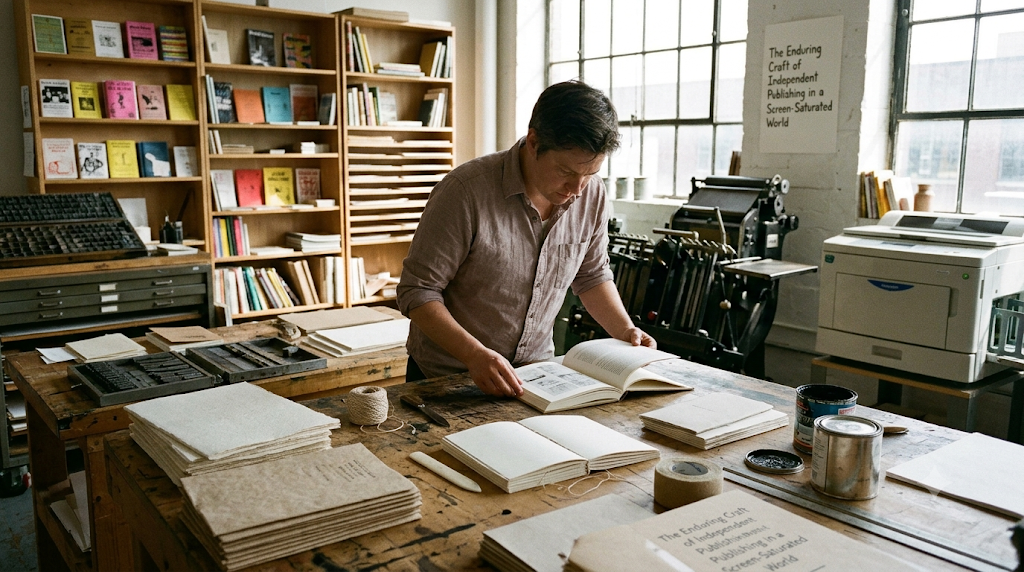
Behind the scenes of independent publishing, the survival of print isn’t an accident—it is the result of obsessive craftsmanship that digital formats simply cannot replicate.
The Architecture of the Page
To an independent publisher, a book is not merely a container for text; it is a spatial experience. Long before a manuscript reaches a printer, designers and editors agonize over micro-decisions that most readers feel instinctively rather than notice consciously.
- Paper Stock and Tactility: Uncoated, heavy-tooth papers absorb ink differently than glossy mass-market stock, softening the contrast on the eye and adding a subtle, velvety resistance beneath the thumb. The weight of the paper dictates the “drape” of the page—how flat a book lies open on a table without needing to be forced.
- Typography as Voice: Rather than defaulting to standard digital fonts, independent presses select typefaces with historical or emotional resonance. Adjusting leading (line spacing) and margins gives prose room to breathe, dictating the pacing at which a reader moves through an argument or a scene.
- Binding and Smell: Smyth-sewn bindings—where folded signatures of paper are stitched together with thread before being glued into a cover—allow a book to open flat and endure decades of re-reading, unlike cheap “perfect-bound” paperbacks that crack down the spine. Even the scent of soy-based inks and binder’s glue anchors the reading experience in physical memory.
The Value of Scarcity and Community
Digital publishing operates on infinite abundance—if everything is available everywhere all the time, nothing feels urgent. Independent publishers operate on intentional scarcity. Small print runs—often ranging from 300 to 2,000 copies—turn a publication into an artifact of a specific moment. Risograph printing, letterpress covers, and hand-numbered editions embrace slight mechanical imperfections, ensuring no two copies are entirely identical.
This physical reality naturally fosters human ecosystems around the work. Independent publishing doesn’t live on engagement metrics; it lives at small-press book fairs, local independent bookshops, launch readings, and living-room print studios. Readers don’t just subscribe to a feed; they become patrons of a tangible cultural effort.
Why Print Persists
Screens are unmatched tools for searching, scanning, and rapid information retrieval. Yet when it comes to deep attention, contemplation, and cultural memory, the physical book remains unrivaled technology. It has no battery to die, no hyperlinks pulling your focus away mid-sentence, and no algorithm deciding what you should read next. By treating every page as an intentional object, independent publishers remind us that how we encounter words fundamentally shapes how deeply we value them.