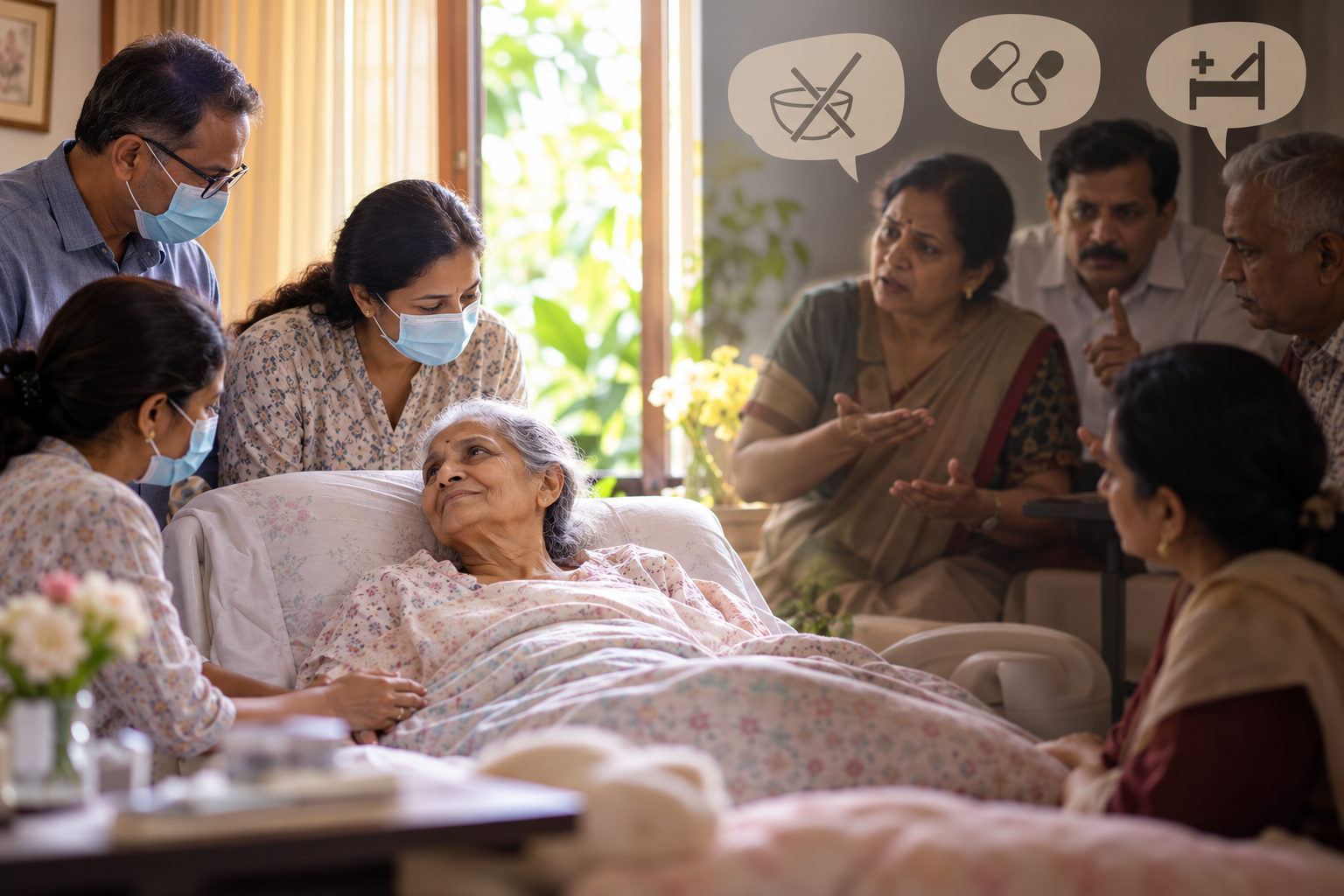
Caring for an elderly parent through a critical illness—whether advanced cancer or renal disease—is an exhausting, delicate undertaking. For patients whose immune systems are compromised by chemotherapy or systemic decline, even routine infections can prove catastrophic. A casual visit from someone with a mild cold or an uncovered cough can trigger complications far more dangerous than the primary illness itself—a harsh reality laid bare during the COVID-19 pandemic.
Yet infection control is only half the battle; managing the human environment is often just as fraught.
I witnessed this firsthand while caring for my mother during her treatment for colon cancer. While managing chemotherapy side effects was medically straightforward, identifying secondary infections was an uphill task. Equally complex was navigating the behavior of visiting friends and relatives.
Some visitors are inherently thoughtful. They wear masks, keep a safe physical distance, and speak with gentle restraint. They resist the urge to prescribe unsolicited diets or alternative treatments, and instead offer quiet emotional solidarity or practical help to relieve exhausted caregivers.
Others, however, seem determined to out-counsel the oncologists. They dispense amateur prognoses, dietary mandates, and unverified remedies with absolute confidence, entirely unaware of the delicate clinical balance being maintained.
Worse still are remarks that reveal profound emotional carelessness. During my mother’s illness, people made baffling statements such as, “It will be difficult for you if she continues to live.” Others shared stories of neighbors who were heavily sedated just to keep them quiet. A woman from a local congregation even told me, “Son, don’t lift your mother. It won’t take you to heaven.” Whatever the intent behind such words, they impose a heavy emotional tax on families already strained by grief and uncertainty.
One relative repeatedly proclaimed that he had no fear of dying “with cotton stuffed in his nostrils”—a macabre boast he made in front of my critically ill mother, just as he had made it twenty years earlier beside my father’s hospital bed at Kottayam Medical College. Such performative detachment may comfort the speaker, but it is deeply demoralizing to a patient fighting for their life.
These experiences point to a critical gap in our social fabric: the need for palliative care literacy. In an ageing society facing a rising burden of chronic illnesses, people must learn the basic etiquette of presence, empathy, and restraint.
Words carry clinical weight. A careless remark deepens anxiety, chips away at a patient’s dignity, and isolates the caregiver. Conversely, quiet presence, practical assistance, or the simple willingness to listen without lecturing offers genuine relief.
Palliative care is too often viewed strictly through a clinical lens—pain management, hospice wards, and end-of-life protocols. Its underlying values of dignity, compassion, and mindful communication must extend beyond hospital walls into living rooms and community spaces. Caring for the critically ill is not solely the duty of doctors, nurses, and direct family members; it demands a literate, supportive community.
As the governments in India continues to expand its palliative care initiatives and institutional networks, public education must become an explicit pillar of this effort. Alongside health awareness campaigns, communities, religious institutions, and civic groups should be equipped with the fundamentals of supportive care: how to visit responsibly, how to respect caregiver boundaries, how to acknowledge the limits of personal advice, and when simply to hold silence.
Palliative care literacy is not about medical expertise. It is about recognizing human vulnerability—and learning to walk beside those who are suffering without adding to their burden.